Generic Medicine
How to Read a Medicine Strip: A Simple Guide for Consumers
A medicine strip contains more information than the product's brand name and price. It can include the active ingredient, strength, manufacturer, batch number, expiry information and important instructions. Understanding these details helps consumers verify what they have purchased and ask better questions when something appears unclear. Here is a practical guide to reading common information printed on medicine packaging.
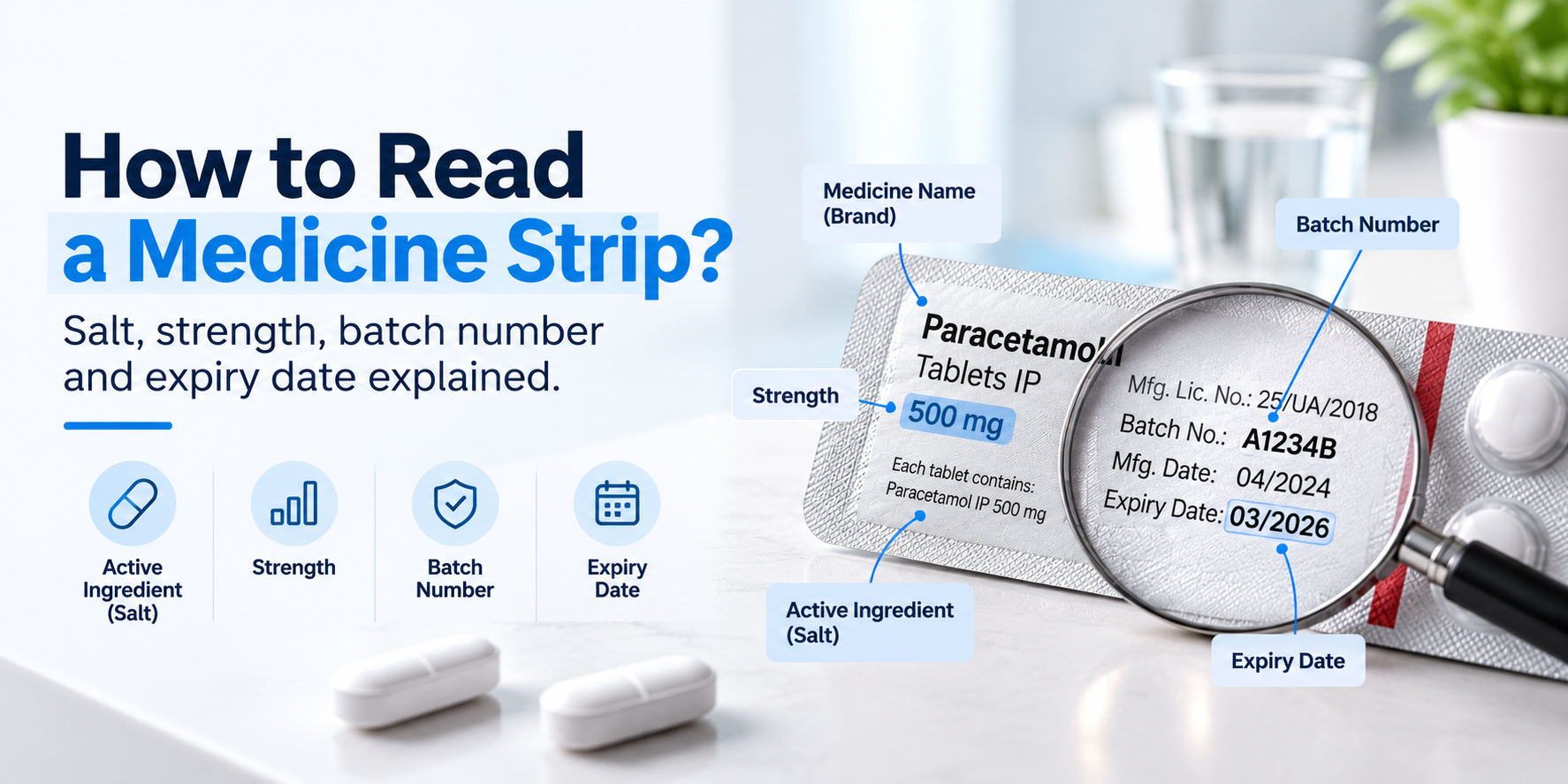
1. Brand Name The brand name identifies the marketed product. Different manufacturers may sell products under different brand names, including products that contain the same active ingredient. However, brand names alone do not establish that two medicines are equivalent. Always check the other product details before considering an alternative. 2. Active Ingredient The active ingredient is the substance responsible for the medicine's intended pharmacological effect. It may be printed below or near the brand name. In India, the term "salt" is commonly used to refer to the active ingredient. When comparing products, confirm the ingredient with a pharmacist or doctor rather than relying only on the brand name. 3. Strength Strength indicates the amount or concentration of the active ingredient in a particular dosage unit or volume. For example, a label may state 500 mg per tablet or a specified number of milligrams per 5 mL of liquid. These measurements describe different dosage forms and should not be compared without considering the full instructions. A higher strength does not mean a medicine is better. The appropriate strength depends on the prescription and clinical circumstances. 4. Dosage Form The dosage form describes how the medicine is supplied, such as: Tablet Capsule Oral liquid Cream Ointment Modified-release tablet The dosage form matters because different formulations can have different administration instructions. Do not crush, split or dissolve a medicine unless the product instructions and a qualified healthcare professional confirm that doing so is appropriate. 5. Batch or Lot Number The batch number identifies a particular manufacturing batch. It helps manufacturers and relevant authorities trace products when investigating quality issues or conducting recalls. Keep the packaging available if you need to report a suspected defect or ask the manufacturer about a product. 6. Manufacturing and Expiry Dates The manufacturing date indicates when the product was manufactured, while the expiry date indicates the end of its stated shelf life under the specified conditions. Always check the expiry information before use. Do not use an expired medicine. If the date is unclear or appears altered, ask the pharmacist for clarification. 7. Manufacturer Information Packaging generally includes manufacturer details and other declarations required under applicable regulations. Read the information carefully and be cautious if the packaging appears damaged, tampered with or inconsistent. If you suspect that a product is counterfeit or compromised, do not use it until the concern has been resolved. 8. Maximum Retail Price The maximum retail price, or MRP, is an important price declaration where applicable. Check the declared MRP and the amount charged. Keep your purchase bill in case you need to resolve a pricing or transaction concern. When comparing prices, consider the pack quantity as well as the total price. 9. Storage Instructions Some medicines require special storage conditions. The packaging may specify temperature limits, protection from light or other instructions. Follow the product's directions and ask the pharmacist if you are unsure how to store it. 10. Prescription and Usage Instructions The packaging may include administration information, warnings or references to accompanying product information. Follow your prescription and the directions supplied by your healthcare professional. If the medicine strip does not contain enough information to understand how to use the medicine safely, ask your pharmacist before taking it. What Should You Do If the Packaging Looks Suspicious? If the strip appears tampered with, information is missing or the product differs unexpectedly from what you were prescribed: Do not use the product until the issue is resolved. Return to the pharmacy for clarification. Keep the packaging and bill. Contact the manufacturer or appropriate regulatory authority if necessary. Frequently Asked Questions Why is the batch number important? It helps identify and trace a particular manufacturing batch. Can I take a medicine if the expiry date is unreadable? Do not use it until the product's expiry information has been reliably confirmed. Does a familiar brand name guarantee authenticity? No. Purchase from legitimate sources and examine the packaging and product details. Conclusion Reading a medicine strip carefully is a simple but useful habit. Check the product name, active ingredient, strength, batch details, expiry date and storage instructions. Ask a pharmacist whenever something is unclear. Genericart Medicine Pvt. Ltd. — Wahi Kaam, Sahi Daam.

