Why Do Medicines With the Same Salt Have Different Prices in India?
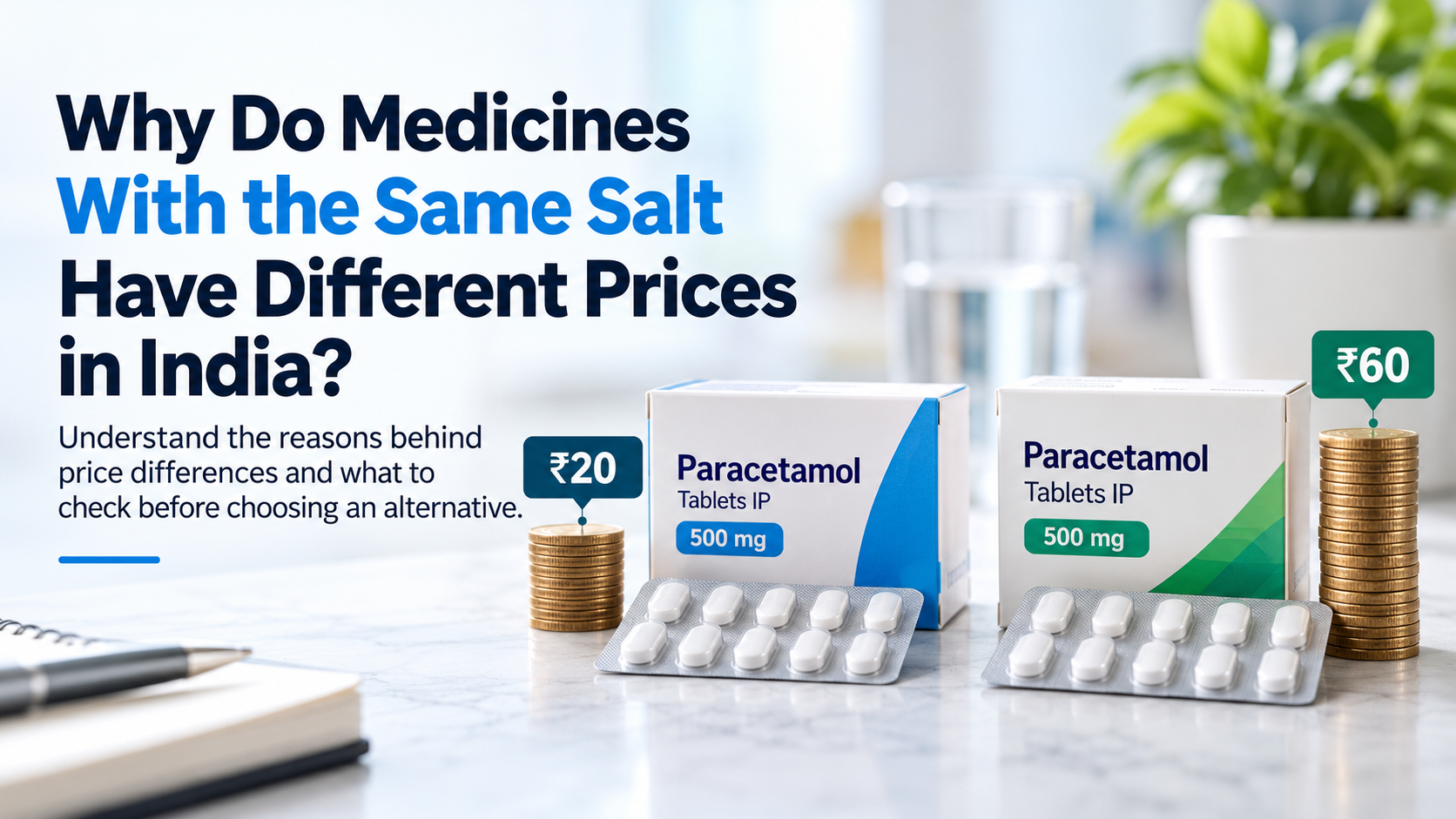
Have you ever visited a pharmacy, compared two medicine strips and wondered why products containing the same active ingredient have different prices?It is a common question. Patients may find medicines with similar ingredients available under different brand names, manufacturers and price points. Does a higher price automatically mean better quality? Does a lower price necessarily mean a compromise? The answer requires understanding how medicines are developed, manufactured, marketed and distributed.
What Does the Salt in a Medicine Mean? In everyday pharmaceutical language in India, people often use the word "salt" to refer to a medicine's active pharmaceutical ingredient, or API. The active ingredient is the component responsible for the medicine's intended pharmacological action. However, checking the salt name alone is not enough to establish that two products are interchangeable. Strength, dosage form, release characteristics and other relevant product details also matter. Five Reasons Medicines Can Have Different Prices 1. Brand positioning and marketing Pharmaceutical companies may market medicines under different brand names and invest different amounts in promotion, distribution and brand development. These commercial decisions can influence the final price, although branding alone does not establish clinical superiority. 2. Manufacturing and operating costs Manufacturers may have different production facilities, operating expenses, sourcing arrangements and business structures. These differences can contribute to variations in the prices of comparable products. 3. Distribution and supply chains Medicines move through manufacturers, distributors, stockists and pharmacies before reaching consumers. Distribution arrangements and associated costs can affect the final selling price. 4. Competition and market demand The number of manufacturers offering a particular medicine, demand for the product and competitive conditions may influence pricing. A medicine with several competing products may have different pricing dynamics from one with fewer alternatives. 5. Government pricing regulations Certain medicines in India are subject to price controls under applicable regulations. The National Pharmaceutical Pricing Authority (NPPA) plays an important role in pharmaceutical price regulation. The applicable rules depend on the specific medicine and regulatory circumstances. Consumers should not assume that every medicine's price is regulated in the same way. Does a Higher Price Mean Better Quality? Not necessarily. Price alone cannot establish a medicine's quality, effectiveness or suitability. Products must be assessed against the relevant regulatory requirements, manufacturing standards and product-specific characteristics. Likewise, a lower-priced product should not automatically be assumed to be equivalent to another product merely because the salt name appears similar. Consumers should purchase from legitimate pharmacies and consult a doctor or pharmacist before changing a prescribed medicine. How Can You Compare Medicines Responsibly? Before considering an alternative, check: - Active ingredient. - Strength and dosage form. - Release mechanism, where applicable. - Manufacturer and product details. - Relevant approval and quality information. - Current price and pack quantity. Ask a qualified healthcare professional whether the alternative is suitable for your prescription. How Genericart Fits Into the Conversation Genericart Medicine Pvt. Ltd. operates in the generic medicines segment, with a focus on affordable medicine options. Its philosophy, "Wahi Kaam, Sahi Daam," reflects the importance of considering value alongside responsible medicine selection. The objective is not simply to choose the lowest price. It is to make informed decisions about appropriate medicines and their costs. Frequently Asked Questions Why do two medicines with the same salt have different prices? Differences in branding, manufacturing costs, distribution, competition and applicable pricing rules may contribute to price differences. Is the most expensive medicine always the best? No. Price alone cannot establish clinical quality or suitability. Can I switch to a cheaper medicine with the same salt? Consult your doctor or pharmacist. They can assess the ingredient, strength, formulation and other relevant factors. Conclusion Medicine prices can vary for several reasons, and understanding those differences helps consumers ask better questions. Compare products carefully, use legitimate pharmacies and seek professional guidance before switching medicines. Genericart Medicine Pvt. Ltd. — Wahi Kaam, Sahi Daam.

